
 October 4, 2017
 Mohsen Daemi
Intel’s New 8th Gen I7 CPUs (Coffee Lake) Video Gaming Performance in Desktop & Mobile
Intel and AMD are in new competition over the Best Gaming CPUs after Ryzen, now Intel Is fighting back by Coffee Lake in both Desktop & Mobile PCs
Intel’s 8th generation CPUs the Coffee Lake processors are expected to be the next big processing thing to strongly challenge the AMD’s new efforts to compete with the new CPU and APU platform the Ryzen and the coming up Ryzen 2nd gen. Many people say this is an AMD-inspired move, Intel is replacing the 7th Gen Kaby Lake processors after less than a year.
Intel 8th gen cpus coffee lake
Image credit: Intel
Intel 8th gen Coffee Lake release date
Intel’s next desktop gaming CPUs are set to launch October 5, 2017. Because of leaks Intel have been forced to announce the October 5 release date earlier.
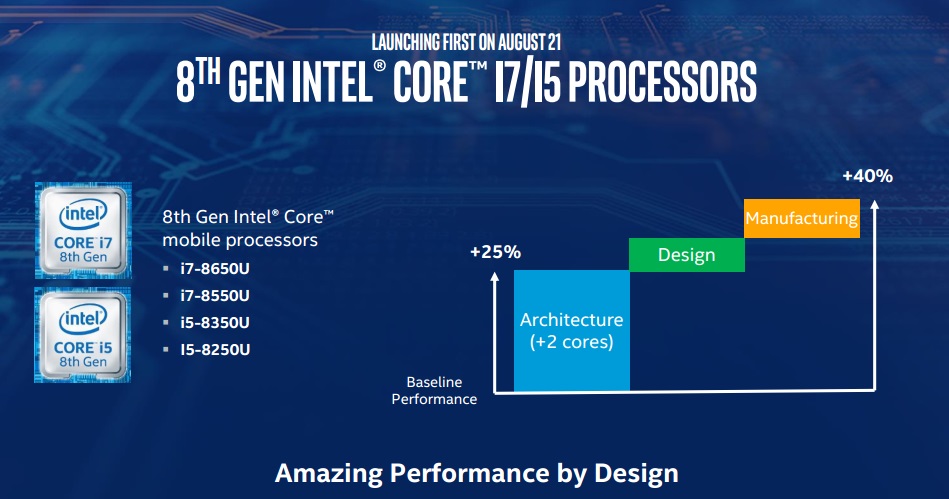
Intel 8th gen cpus coffee lake
Image credit: Intel
Intel 8th gen Coffee Lake pricing
With the AMD Ryzen competition now Intel can’t price their own six-core CPUs much more than the i7 and i5 of the 7th Gen that is almost in the same range as the AMD’s Ryzen, so prices starting at $117 for the quad-core i3 and top out at $359 for the six-core, 12-thread Core i7.
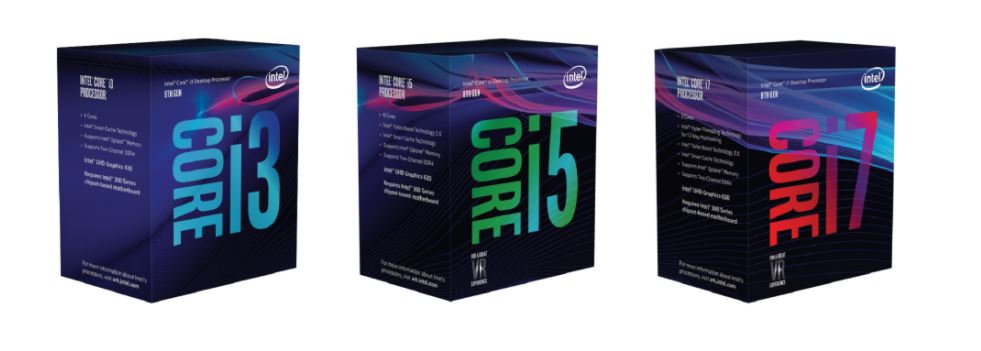
Intel 8th gen cpus coffee lake
Image credit: Intel
What is expected to be delivered by new 8th gen CPUs?
The 8th Generation Intel Core processors is to include a new six cores for more processing power lineup. That’s two more cores than the previous generation from Intel. That is a bold move by Intel though, Intel has always felt confidence enough to stay in 4 cores area while AMD has already mode to it 8th core. The reason is that Intel single CPU power is much more that AMD and It has been AMD trying to catch up to Intel by increasing cores and creative architectures. But now with release of the new Ryzen and upcoming Ryzen 2nd gen maybe Intel is feeling a bit insecure and feels it time to move to 6 and 8 core CPUs to prevent leaving behind and lead the high end market. The 8th get has Turbo Boost Technology 2.0 and maximum turbo frequency up to 4.7 GHz and up to 12 MB of cache memory. 12 Thread architecture, Up to 12-way multitasking support. The unlocked 8th Generation versions like i7-8700K has the ability to be tweaked in performance and maybe that is for the strong support the new systems need to be able to run VR gaming.
Intel Coffee Lake Game performance performance

Intel 8th gen cpus coffee lake
Image credit: Intel
“Earlier this year you probably heard we committed to get a 15% performance improvement as we went from 7th generation to 8th generation core,” said Intel’s Gregory Bryant.
“But you know our engineers, they weren’t satisfied with that, they didn’t want to stop there. They knew that they could do better and they dug in”.said Intel’s Gregory Bryant
“Now I’m happy to report the 8th generation is going to deliver more than double that. That’s right, more than 30% performance improvement generation over generation.”said Intel’s Gregory Bryant
In sigle core benchmarks it has always been Intel beating AMD and now the single-core performance of Intel’s new Coffee Lake ought to shake gaming CPUs lineup, basicaly cause of the high specs you seen on the new series. .5GHz+ overclocking that’s going to be tough for AMD’s Ryzen to catch. All of them are 14 nm architecture. Average 3.2 to 4.7 Processing speed and 12 mg of cache. And very good power consumption of 65 to 90 w. At the mobile side, The 10nm Cannon Lake range is likely to be held off until next year probably the continuation of Coffee lake.

Intel 8th gen cpus coffee lake
Image credit: Intel
Intel 8th-generation Core mobile/ laptops
Intel’s first info on its new 8th-generation chips will be interesting as we get closer to start of 2018. Intel is claiming a “once in a decade” performance boost of 40% generation-over-generation.

Intel 8th gen cpus coffee lake
Image credit: Intel
Four main 8th Gen CPUs recently released by INTEL full specs


Essentials Specs
| Vertical Segment |
Desktop
|
Desktop
|
Mobile
|
Mobile
|
| Processor Number |
i7-8700
|
i7-8700K
|
i7-8550U
|
i7-8650U
|
| Status |
Announced
|
Announced
|
Launched
|
Launched
|
| Launch Date |
Q4’17
|
Q4’17
|
Q3’17
|
Q3’17
|
| Lithography |
14 nm
|
14 nm
|
14 nm
|
14 nm
|
Performance Specs
| # of Cores |
6
|
6
|
4
|
4
|
| # of Threads |
12
|
12
|
8
|
8
|
| Processor Base Frequency |
3.20 GHz
|
3.70 GHz
|
1.80 GHz
|
1.90 GHz
|
| Max Turbo Frequency |
4.60 GHz
|
4.70 GHz
|
4.00 GHz
|
4.20 GHz
|
| Cache |
12 MB
|
12 MB
|
8 MB SmartCache
|
8 MB SmartCache
|
| Bus Speed |
8 GT/s DMI3
|
8 GT/s DMI3
|
4 GT/s OPI
|
4 GT/s OPI
|
| TDP |
65 W
|
95 W
|
15 W
|
15 W
|
| Configurable TDP-up Frequency |
2.00 GHz
|
2.10 GHz
|
||
| Configurable TDP-up |
25 W
|
25 W
|
||
| Configurable TDP-down Frequency |
800 MHz
|
800 MHz
|
||
| Configurable TDP-down |
10 W
|
10 W
|
Supplemental Information
| Embedded Options Available |
No
|
No
|
No
|
No
|
| Conflict Free |
Yes
|
Yes
|
Yes
|
Yes
|
Memory Specifications
| Max Memory Size (dependent on memory type) |
64 GB
|
64 GB
|
32 GB
|
32 GB
|
| Memory Types |
DDR4-2666
|
DDR4-2666
|
DDR4-2400, LPDDR3-2133
|
DDR4-2400, LPDDR3-2133
|
| Max # of Memory Channels |
2
|
2
|
2
|
2
|
| ECC Memory Supported‡ |
No
|
No
|
No
|
No
|
| Max Memory Bandwidth |
34.1 GB/s
|
34.1 GB/s
|
Graphics Specifications
| Processor Graphics‡ |
Intel® UHD Graphics 630
|
Intel® UHD Graphics 630
|
Intel® UHD Graphics 620
|
Intel® UHD Graphics 620
|
| Graphics Base Frequency |
350 MHz
|
350 MHz
|
300 MHz
|
300 MHz
|
| Graphics Max Dynamic Frequency |
1.20 GHz
|
1.20 GHz
|
1.15 GHz
|
1.15 GHz
|
| Graphics Video Max Memory |
64 GB
|
64 GB
|
32 GB
|
32 GB
|
| Execution Units |
24
|
24
|
||
| 4K Support |
Yes, at 60Hz
|
Yes, at 60Hz
|
Yes, at 60Hz
|
Yes, at 60Hz
|
| Max Resolution (HDMI 1.4)‡ |
4096×2304@24Hz
|
4096×2304@24Hz
|
4096×2304@24Hz
|
4096×2304@24Hz
|
| Max Resolution (DP)‡ |
4096×2304@60Hz
|
4096×2304@60Hz
|
4096×2304@60Hz
|
4096×2304@60Hz
|
| Max Resolution (eDP – Integrated Flat Panel)‡ |
4096×2304@60Hz
|
4096×2304@60Hz
|
4096×2304@60Hz
|
4096×2304@60Hz
|
| Graphics Output |
eDP/DP/HDMI/DVI
|
eDP/DP/HDMI/DVI
|
||
| DirectX* Support |
12
|
12
|
12
|
12
|
| OpenGL* Support |
4.5
|
4.5
|
4.4
|
4.4
|
| Intel® Quick Sync Video |
Yes
|
Yes
|
Yes
|
Yes
|
| Intel® InTru™ 3D Technology |
Yes
|
Yes
|
Yes
|
Yes
|
| Intel® Clear Video HD Technology |
Yes
|
Yes
|
Yes
|
Yes
|
| Intel® Clear Video Technology |
Yes
|
Yes
|
Yes
|
Yes
|
| # of Displays Supported‡ |
3
|
3
|
3
|
3
|
| Device ID |
0x3E92
|
0x3E92
|
0x5917
|
0x5917
|
Expansion Options
| Scalability |
1S Only
|
1S Only
|
||
| PCI Express Revision |
3.0
|
3.0
|
3.0
|
3.0
|
| PCI Express Configurations‡ |
Up to 1×16 or 2×8 or 1×8+2×4
|
Up to 1×16 or 2×8 or 1×8+2×4
|
1×4, 2×2, 1×2+2×1 and 4×1
|
1×4, 2×2, 1×2+2×1 and 4×1
|
| Max # of PCI Express Lanes |
16
|
16
|
12
|
12
|
Package Specifications
| Max CPU Configuration |
1
|
1
|
1
|
1
|
| Thermal Solution Specification |
PCG 2015C (65W)
|
PCG 2015C (130W)
|
||
| TJUNCTION |
100°C
|
100°C
|
100°C
|
100°C
|
| Package Size |
37.5mm x 37.5mm
|
37.5mm x 37.5mm
|
42mm X 24mm
|
42mm X 24mm
|
| Sockets Supported |
FC-BGA1356
|
FC-BGA1356
|
+ Technologies
| Intel® Optane™ Memory Supported‡ |
Yes
|
Yes
|
||
| Intel® Turbo Boost Technology‡ |
2.0
|
2.0
|
2.0
|
2.0
|
| Intel® vPro™ Technology‡ |
Yes
|
Yes
|
No
|
|
| Intel® Hyper-Threading Technology‡ |
Yes
|
Yes
|
Yes
|
Yes
|
| Intel® Virtualization Technology (VT-x)‡ |
Yes
|
Yes
|
Yes
|
Yes
|
| Intel® Speed Shift Technology |
Yes
|
Yes
|
||
| Intel® Virtualization Technology for Directed I/O (VT-d)‡ |
Yes
|
Yes
|
Yes
|
Yes
|
| Intel® VT-x with Extended Page Tables (EPT)‡ |
Yes
|
Yes
|
Yes
|
Yes
|
| Intel® TSX-NI |
Yes
|
Yes
|
No
|
|
| Intel® 64‡ |
Yes
|
Yes
|
Yes
|
Yes
|
| Instruction Set |
64-bit
|
64-bit
|
64-bit
|
64-bit
|
| Instruction Set Extensions |
SSE4.1/4.2, AVX2
|
SSE4.1/4.2, AVX2
|
SSE4.1/4.2, AVX2
|
SSE4.1/4.2, AVX2
|
| Idle States |
Yes
|
Yes
|
Yes
|
Yes
|
| Enhanced Intel SpeedStep® Technology |
Yes
|
Yes
|
Yes
|
Yes
|
| Thermal Monitoring Technologies |
Yes
|
Yes
|
Yes
|
Yes
|
| Intel® My WiFi Technology |
Yes
|
Yes
|
||
| Intel® Identity Protection Technology‡ |
Yes
|
Yes
|
Yes
|
Yes
|
| Intel® Stable Image Platform Program (SIPP) |
Yes
|
Yes
|
||
| Intel® Flex Memory Access |
Yes
|
Yes
|
||
| Intel® Smart Response Technology |
Yes
|
Yes
|
*Info in the Spec tables are from Intel Official website and press releases.
[av_hr class=’default’ height=’50’ shadow=’no-shadow’ position=’center’ custom_border=’av-border-thin’ custom_width=’50px’ custom_border_color=” custom_margin_top=’30px’ custom_margin_bottom=’30px’ icon_select=’yes’ custom_icon_color=” icon=’ue808′ font=’entypo-fontello’ admin_preview_bg=”]
Tags And Keywords:
Technology, video games, Game hardware, pc game cpu, intel 8th generation cpu, intel coffee lake cpu, intel new 8th gen cpu 2017 2018

CONTACTS DETAILS &FOR MORE INFO:
https://www.ultragamerz.com/contact/
- Solana Soars: Could a $450+ SOL Ignite a Meme Coin Frenzy? - June 26, 2024
- Rainbow Six Siege – Official Marketplace Trailer - June 25, 2024
- ImagenAI Poised for Takeoff: Can This Ethereum-Based AI Coin Go 20x? - June 25, 2024